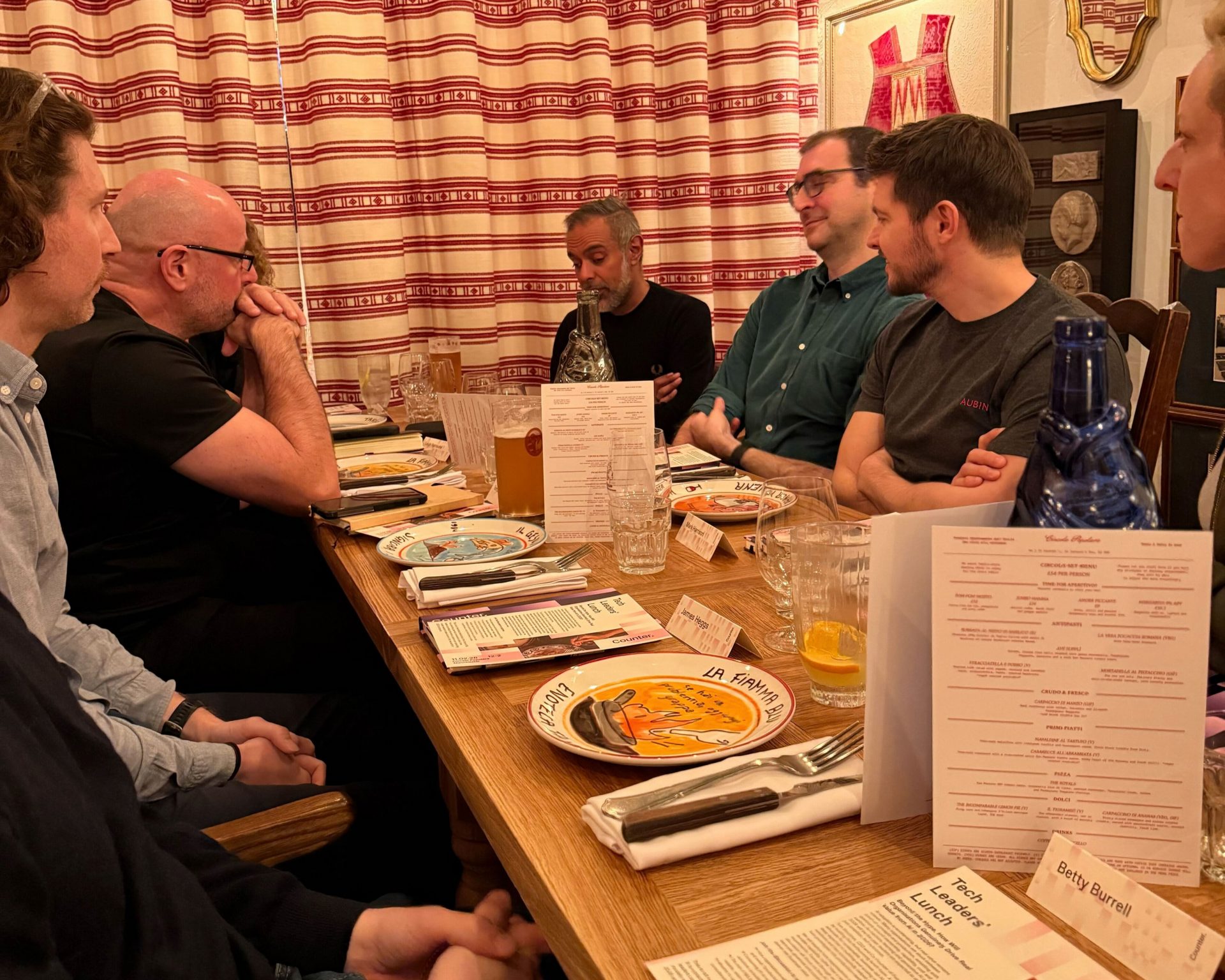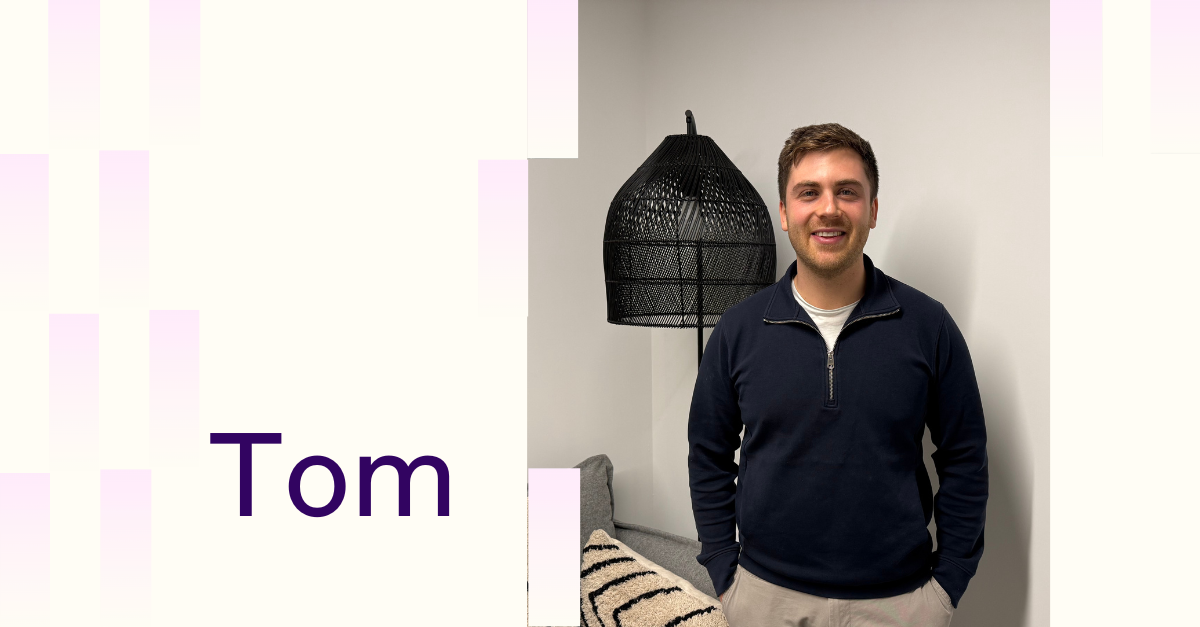

We recently caught up with our Tech Lead, Tom Legg, to find out more about his experience getting into tech and his key areas of focus within his work at Counter.
What career experiences shaped you most as a tech leader?
Each stage of my career shaped me in different ways, but the periods at Sykes and Aiimi were especially formative – both for very different reasons.
Sykes, although earlier in my technical journey, had a lasting long-term impact on my leadership style. I worked with truly exceptional technical leaders who modelled what “first class” looks like both in terms of engineering standards and how they treated their teams. Their leadership would shape my own approach: be approachable, communicate openly, remove blockers and obsess over what genuinely moves the team forward. I also learned the importance of being a clear communicator inside the team, not just outside it. Aligning people around the right problems can dramatically speed up delivery.
At Aiimi, everything became more hands-on and more real. I worked across a mixture of established legacy projects and greenfield initiatives, and I had the opportunity to lead the delivery of an ML application end-to-end. That experience pushed me beyond just contributing code – it required setting the technical direction, defining the architecture, and making decisions that would shape how the product evolved over time. I guided other engineers, aligned with data scientists, and ensured what we built was both technically sound and genuinely valuable for the client.
Balancing this with my work across contracts and government applications taught me how to adapt my leadership style to different domains and stakeholders. The mix of experimentation, mistakes, recovery, and learning made it a formative period, and it cemented my ability to lead proactively while staying grounded in delivery.
These combined experiences – seeing great leadership in action and learning how to drive delivery, manage ambiguity and lead teams form the backbone of how I lead today. They gave me a blend of empathy, technical depth, communication ability, and situational awareness that I still rely on and will continue to in the future.
What client are you currently working with?
I’m currently working with BigChange on their delivery for mobile. This is a 12-month engagement to support BigChange with their mobile engineering solutions. The team includes two mid-level and two associate-level developers working alongside myself.
What problem does Counter aim to solve?
Counter focuses on helping organisations deliver high-quality engineering outcomes by providing experienced engineers who can accelerate delivery, improve engineering culture, resolve architectural challenges, and add technical leadership where it’s needed most.
How do you maintain alignment and communication across distributed teams?
Maintaining alignment in distributed teams starts with clarity. I make sure goals, ownership, and expectations are defined upfront so everyone understands not just what they’re doing, but why it matters. From there, I rely on a predictable cadence – standups, planning sessions, reviews, and architecture discussions – to keep everyone anchored to the same context even when we’re not in the same room.
Tools like Azure Devops, Jira, Confluence, Miro, and GitHub act as shared workspaces, but tools only work when teams use them consistently. I set expectations around how we communicate and document so context is easy to find and alignment scales beyond individual conversations.
Regular 1:1s from my perspective are non-negotiable. They’re an opportunity to discuss priorities, concerns, and growth. In a distributed setup, they help me catch small issues early, stay connected to the engineers, understand morale and workload before they affect delivery. They create a predictable outlet for support and feedback, keeping both alignment and momentum intact.
In addition to this, a key pillar for me is psychological safety. Teams perform best when people feel comfortable raising concerns, asking questions, and flagging issues early. I encourage transparency, share the “why” behind decisions, and normalise open dialogue.
In distributed work, alignment is something you design and consistently build upon. Clarity, consistency, communication and psychological safety are the foundation.
What advice would you give to developers looking to work at a consultancy?
Working at a consultancy is about delivering value to clients, not just writing clean code. Developers who thrive in this delivery focused environment, are adaptable, curious, and quick to learn new technologies. Projects are varied, so flexibility and pragmatism are essential.
Strong communication skills are as important as technical ability. You’ll need to articulate technical decisions to technical and non technical stakeholders, document work clearly, and coordinate with remote, cross-functional teams.
A piece of advice I would relay to developers wanting to work at a consultancy is to treat every project as a learning opportunity. Seek feedback, reflect on lessons learned, and embrace new challenges. The combination of adaptability, communication, and curiosity is what allows developers to grow and succeed in a consultancy environment, gaining experience that is both broad and deep.
What industry trends are you watching that could impact Counter’s direction?
I’m closely watching how AI is reshaping the way companies build products and solve complex problems. It’s becoming a major differentiator for consultancies – clients increasingly expect not just engineering execution, but guidance on how to apply AI effectively across their business.
One area with especially high potential is using AI/ML to unlock insight from the data businesses already have. Companies generate massive amounts of information – internal documents, operational data, user interactions. Most organisations today, from my perspective, still struggle to turn that raw data into strategic value. AI is changing that. We’re reaching a point where models can synthesise, reason over, and surface insight from data in ways that were previously either too costly or too manual.
I see a clear opportunity for Counter to evolve by expanding our talent pool in data-focused engineering – not just traditional data engineers, but software engineers who are comfortable working with data pipelines, ML tooling, and model integration.
If demand continues to grow the way they are now, this could meaningfully influence Counter’s direction – positioning us as a partner that not only builds great products but helps clients unlock the full value of AI.
What tech or tools are you personally excited about right now?
MCP servers (Model Context Protocol) for me is an area I’m really excited about at the moment. The idea of giving AI agents structured, secure access to tools, data, and dev workflows feels like a huge shift. Instead of AI just generating code, MCP enables it to interact with systems – debugging, running tasks, retrieving information, and automating development workflows in a controlled way. I think this will transform how engineers work day-to-day. We’ll move toward a model where developers orchestrate and validate, while AI handles a growing share of the repetitive or context-heavy tasks. It’s early, but the potential for true “AI-assisted engineering environments” is something I’m really excited to explore more.