
Lessons from an AI hackathon and the reality of building AI teams that deliver
AI capability is advancing at a remarkable pace. New tools, platforms and models appear almost weekly, each promising faster delivery and better outcomes. Yet for all this progress, many organisations are struggling to turn AI investment into tangible value.
Recently, I took part in the AWS Breaking Barriers Hackathon, which paired charities with multidisciplinary tech teams across Manchester, London and Dublin. The challenge was to use modern cloud tooling, with a particular focus on large language models and agentic AI, to tackle real problems facing non-profits.
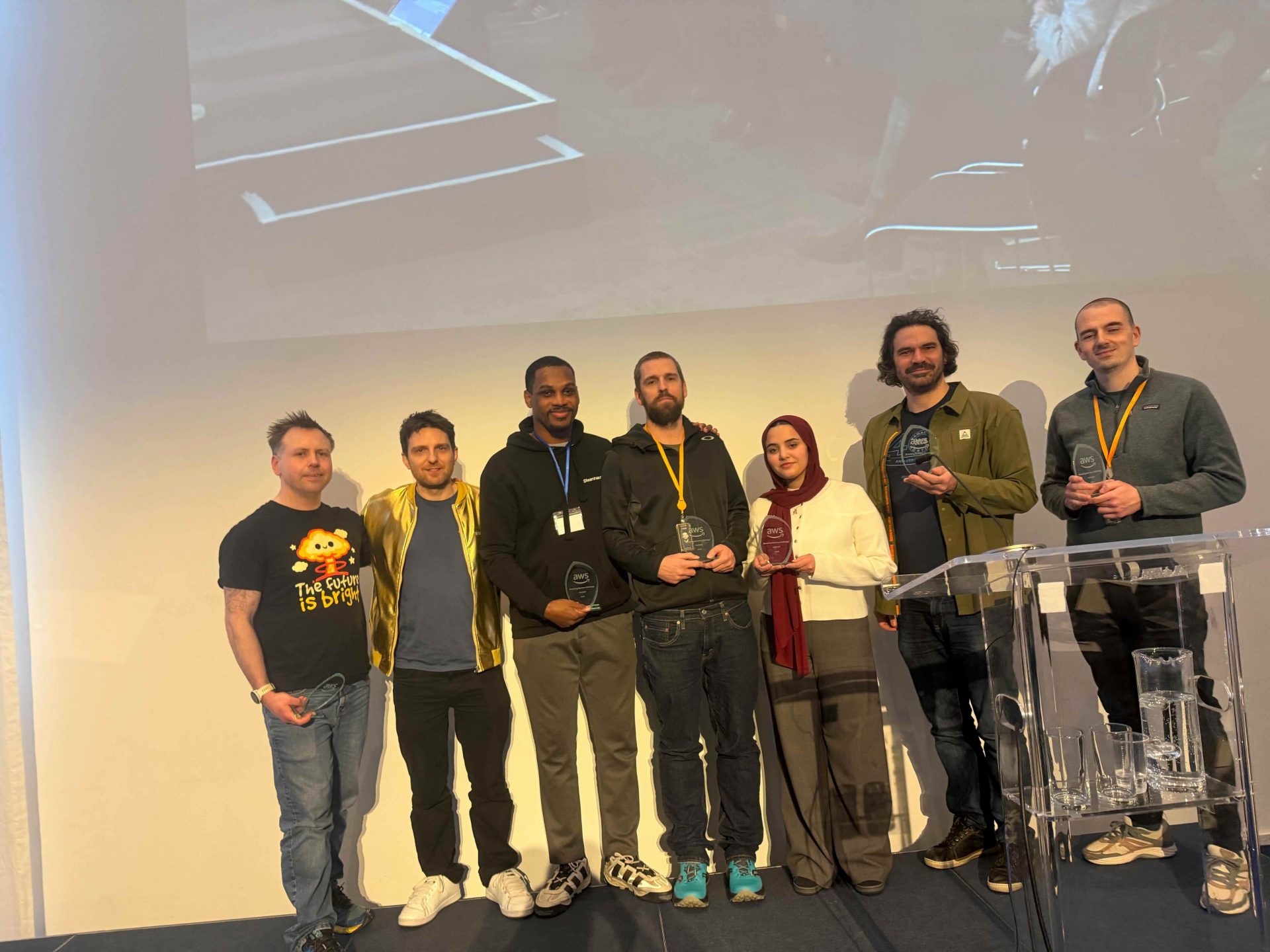
Each team was given access to AWS accounts and encouraged to experiment freely. By the end of the event, our team secured the judges’ vote for the Manchester cohort. While technology played its part, the most important takeaway was not about tooling, architecture or model choice.
The differentiator was people.
Why Most AI Investment Still Fails
This experience reflects a wider pattern. According to MIT’s The GenAI Divide: State of AI in Business 2025, between 30 and 40 billion dollars has already been invested in generative AI initiatives. Yet 95 percent of organisations are seeing no meaningful return. The remaining 5 percent are generating value measured in the millions.
That gap is not explained by access to better models or more advanced infrastructure. The tools are increasingly available to everyone. What separates success from failure is how teams identify the right problems, collaborate effectively and make decisions under uncertainty.
Hackathons are a useful microcosm of this reality. They compress time, remove certainty around team composition and encourage exploration. That freedom can unlock creativity, but without early alignment it can also lead teams down promising paths that ultimately go nowhere.
AI amplifies this challenge. Experimentation with LLMs and agentic systems requires iteration, comparison and evaluation. Without strong team dynamics, progress slows quickly. Without psychological safety, people disengage even faster.
AI Is a Human Challenge Before It Is a Technical One
In many ways, this mirrors the environment organisations are operating in today. Businesses and public sector bodies alike are under pressure to move quickly as AI capabilities evolve, while still meeting expectations around quality, safety and governance.
The technology landscape is crowded and shifting. Choosing what not to build is as important as choosing what to pursue. Navigating that complexity is not just a technical problem. It is a human one.
Our hackathon team brought a mix of technical skills, but the real advantage was a shared mindset. There was mutual respect, open communication and a willingness to collaborate without ego. Work was distributed evenly. Contributions were valued. Decisions were made collectively.
Technical skills can often be acquired relatively quickly. Strong teamwork, communication and shared ownership are harder to develop and harder still to retrofit. In an era of AI-generated code and so-called vibe coding, the ability to collectively evaluate, challenge and refine output is becoming more valuable than raw implementation speed.
How the Team Actually Worked
Practically, this meant resisting the urge to over-structure too early. We allowed time for exploration, giving individuals space to spike different approaches and experiment with unfamiliar services. At the same time, we avoided isolated silos.
Experiments were time-boxed and reviewed openly. Decisions were based on evidence rather than personal preferences for particular tools or technologies. Everyone was involved in shaping the final solution, including the pitch itself, which continued to evolve right up until submission.
Crucially, we aimed high by focusing on a real problem, not by forcing a new technology into an ill-fitting use case. The solution, a bespoke Career Path builder focused around The King’s Trust course offerings, was designed to be scalable and genuinely useful, rather than impressive in isolation
What This Means for Organisations Building AI Teams
In production environments, organisations have far more control than a hackathon ever allows. That creates a real opportunity.
Teams can be deliberately structured around people who value communication, commitment and shared ownership, alongside technical capability. They can prioritise inclusive decision-making, early alignment and clear problem definition before reaching for new tools.
At Counter, this is something we see repeatedly across client work. AI initiatives that succeed tend to be led by teams with strong collaboration habits, clear accountability and the confidence to experiment without losing focus. The technology enables progress, but it does not create it on its own.
Turning AI Investment into Real Value
As AI tooling becomes more accessible, the competitive advantage shifts away from who has access to the best models and toward who can organise people most effectively around them.
The next wave of AI value will not come from bigger budgets or more ambitious proofs of concept. It will come from teams that can align early, distribute work intelligently and evaluate outcomes honestly.
People remain the hardest part of any transformation. They are also the most powerful lever.
Get that right, and the technology tends to follow.